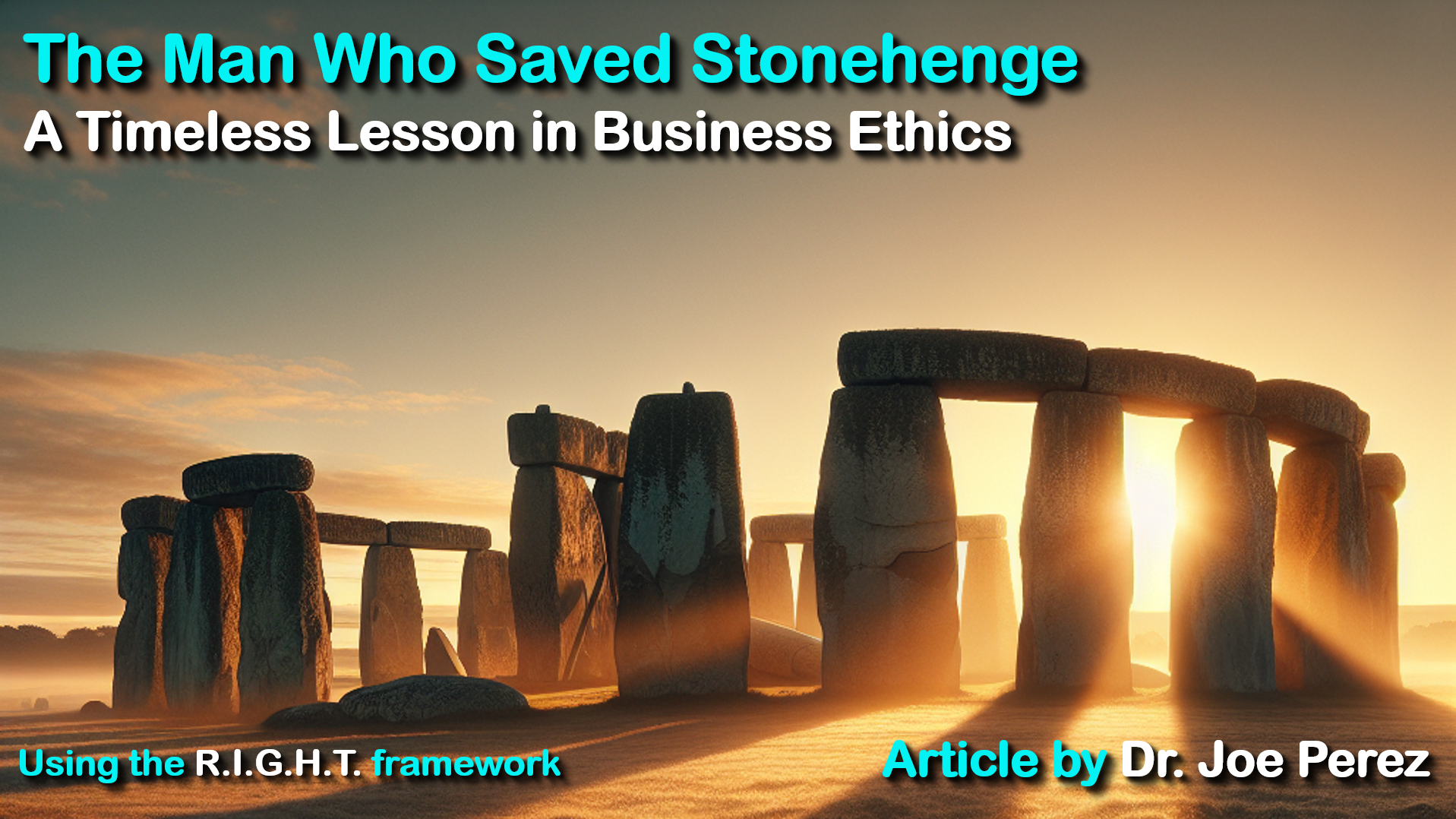
Stonehenge & Business Ethics: Prioritizing Public Good Over Private Gain
In the quiet English countryside, where ancient stones stand as silent sentinels to millennia of human history, lies a remarkable tale that continues to resonate with powerful lessons on ethical leadership and corporate responsibility. This isn't just a story about a prehistoric monument; it's a profound stonehenge life lesson in choosing the greater good over personal advantage, a narrative as relevant today in our boardrooms and council chambers as it was over a century ago.
The year was 1915. World War I raged across Europe, casting a long shadow of grief and uncertainty. Amidst this global turmoil, Stonehenge, the iconic megalithic wonder, found itself facing an existential threat not from bombs or battles, but from a mundane estate sale. The Antrobus family, owners of the surrounding Wiltshire estate, had suffered unimaginable losses on Belgian battlefields and decided to sell their ancestral lands – with the 5,000-year-old monument bundled into the listing.
What followed was an extraordinary moment of serendipity and foresight. A local barrister named Cecil Chubb, originally dispatched to Salisbury to purchase dining chairs for his wife, found himself captivated by the auction. Despite humble beginnings as a saddler's son, Chubb, driven by an instinctive sense of heritage and public duty, raised his hand and bid a staggering £6,600 (a sum exceeding $1 million in today's currency). He left the auction not with dining chairs, but as the unexpected owner of one of the world's most cherished historical sites. His decisive action prevented a critical loss, as his chief rival was a wealthy American with a notorious reputation for acquiring historic structures, dismantling them, and shipping them across the Atlantic for private reassembly. Imagine Stonehenge on a private estate in America – a fate Chubb heroically averted.
The Unforeseen Guardian: Cecil Chubb's Enduring Ethical Legacy
Cecil Chubb’s purchase of Stonehenge wasn't merely a personal acquisition; it was a profound act of public service. Three years after his unexpected purchase, he made a decision that cemented his legacy as an ethical leader: he gifted Stonehenge to the nation. His only stipulations were clear and simple: the site must be protected, and it must remain accessible to the public for generations to come. This selfless act serves as a timeless stonehenge life lesson, highlighting how individual choices can have monumental, lasting impacts on collective heritage and public welfare.
Chubb's story transcends a mere anecdote of historical preservation. It encapsulates the very essence of ethical leadership – a commitment that extends far beyond personal gain or legal compliance. He chose not the path of private ownership and potential profit, but the path of stewardship for all. This fundamental tension, between self-interest and societal responsibility, is a constant companion in modern business, government, and everyday life. Every boardroom decision, every public policy debate, and every agency directive is ultimately shaped by the ethical compass of those at the helm.
The decision to donate Stonehenge to the public sphere is a powerful illustration of the masterclass in ethical leadership it represents. It speaks volumes about foresight, a deep respect for cultural heritage, and an understanding that some treasures belong to humanity, not just individuals.
Beyond Compliance: Defining True Business Ethics in the Modern Era
Business ethics are not just abstract concepts; they are the bedrock values and standards that inform and guide behavior within organizations, whether private enterprises or public institutions. They establish the moral obligations that leaders and teams willingly embrace: acting with fairness, upholding promises, fostering trust with all stakeholders, and managing resources responsibly. This commitment goes significantly beyond merely adhering to the letter of the law. Ethical conduct truly manifests in the everyday decisions where no rigid regulations dictate the answer, and no one is explicitly monitoring every move.
Consider the myriad choices faced by businesses today: supply chain transparency, environmental impact, data privacy, fair labor practices, and community engagement. In each instance, ethical considerations push organizations to weigh short-term gains against long-term sustainability and societal well-being. For example, a company choosing to invest in eco-friendly production methods, even if initially more expensive, demonstrates an ethical commitment to environmental stewardship. Similarly, a public agency prioritizing equitable access to services, even if it requires reallocating resources, embodies an ethical commitment to fairness and social justice.
These ethical standards are crucial because they cultivate organizational cultures where honesty, accountability, and fairness become deeply ingrained habits. They ensure that commercial objectives and public missions remain aligned with human dignity and community welfare. An ethical framework helps organizations navigate complex dilemmas, fostering resilience and building an enduring reputation. As one might glean from a Stonehenge's ancient wisdom: lessons on life's journey, enduring structures and institutions are built on strong, immutable foundations.
Practical Steps Towards Ethical Cultures:
- Develop a Clear Code of Conduct: Articulate core values and expected behaviors for all employees.
- Lead by Example: Ethical leadership starts at the top; leaders must model the behavior they expect.
- Provide Regular Training: Equip employees with tools to identify and address ethical dilemmas.
- Foster Open Communication: Create safe channels for reporting concerns without fear of retaliation.
- Prioritize Stakeholder Interests: Balance the needs of shareholders, employees, customers, and the wider community.
Why Public Good Matters: Lessons for Modern Leadership
The case for strong business ethics is profoundly practical. At its core, every organization, whether private or public, operates on a foundation of trust. Without it, customers will seek alternatives, employees will disengage and lose motivation, and citizens will lose faith in their public institutions. The erosion of trust is a dangerous slippery slope; once lost, recovery can take years, and sometimes, it's never fully regained.
In government and public service, the stakes are even higher. Public organizations manage taxpayer money and are entrusted with delivering essential services that impact millions of lives – from schools and hospitals to roads, safety, and environmental protection. Citizens place immense trust in public servants to act with prudence, fairness, and transparency. This trust should never be taken for granted; it must be continuously earned and meticulously maintained.
Chubb’s gift reminds us that some assets are invaluable not for their monetary worth, but for their intrinsic public good. Modern leaders, across all sectors, face analogous decisions daily. Should a company prioritize quarterly profits over sustainable environmental practices? Should a government agency cut corners on safety regulations to save money? These are not merely economic or legal questions; they are ethical quandaries that define the character of an organization and its impact on society.
The enduring stonehenge life lesson from Chubb's act is that true success, both personal and organizational, often lies in the willingness to prioritize collective benefit over individual gain. It’s about building a legacy of integrity and contribution that extends far beyond one's own lifetime.
Stonehenge's Enduring Message: A Call to Ethical Action
Stonehenge itself, standing against the backdrop of history, offers its own powerful, unspoken lessons. It speaks of collective effort, monumental ambition, and the ingenuity of ancient peoples. It embodies human existence, with some theories suggesting its stones held healing powers, drawing early pilgrims seeking solace and restoration. In this sense, the monument itself points towards deeper human needs and shared purposes.
Cecil Chubb’s story is a modern echo of Stonehenge's ancient wisdom. He understood, perhaps instinctively, that some things are too significant, too resonant with human spirit and heritage, to be confined to private hands. His act of altruism transformed a personal asset into a public trust, securing its future for all. This is the essence of the stonehenge life lesson: a call to leaders and individuals alike to look beyond the immediate and consider the enduring impact of their choices on the world around them.
In conclusion, the tale of Stonehenge’s preservation and donation by Cecil Chubb is more than a historical footnote; it is a vivid parable for our times. It powerfully illustrates the critical importance of business ethics and the profound impact of prioritizing public good over private gain. In a world increasingly complex and interconnected, the choices we make today, guided by integrity and a sense of responsibility, will undoubtedly shape the legacy we leave for future generations, much like the enduring stones of Stonehenge continue to remind us of the wisdom of the past.